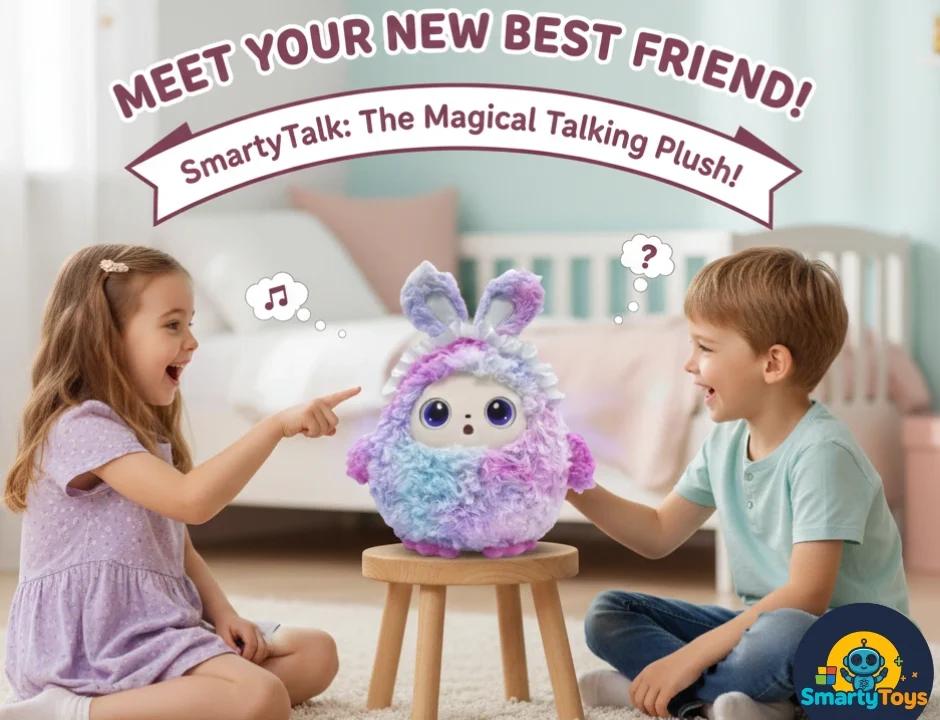

In a complex world, helping children understand, name, and manage their emotions is one of the most vital tasks of modern parenting. Experts increasingly emphasize emotional intelligence (EQ) as key to future success and well-being. Modern interactive toys are stepping up to this challenge, moving beyond simple entertainment to become tools for emotional learning.
“Mood-detecting” toys—or, more accurately, emotional companion toys—leverage technology (like advanced voice recognition and responsive programming) to interact with children in ways that promote self-awareness and empathy. They provide a non-judgmental friend that responds to a child’s voice and play style, guiding them through feelings in a fun, safe, and engaging way.
Here are three innovative, interactive toys from SmartyToys that act as emotional companions, fostering communication and social skills:
- SmartyTalk Smart Talking Plush Buddy
- SmartyPup Intelligent Robot Dog
- SmartyBot Smart Interactive Robot Toy
This article explores the rising importance of emotional companion toys, the unique ways these devices support a child’s emotional growth, and how they provide meaningful interaction that surpasses passive play.
Why Emotional Companion Toys Are the New Essential
Traditional toys require children to impose their feelings onto them (e.g., pretending a doll is sad). Emotional companion toys reverse this by reacting to the child, creating a dynamic feedback loop that mirrors real social interaction.
- Non-Judgmental Listening: These toys provide a safe space for children to express worries or big feelings without fear of criticism or correction, encouraging open communication.
- Empathy Training: By having the toy respond in character (e.g., the dog performing a silly dance when it senses a sad tone, or the plush offering encouraging words), children learn cause-and-effect in emotional exchanges.
- Emotional Vocabulary: Interactive toys often use specific language to name feelings, helping children build a vocabulary to articulate their own internal state.
- Social Skill Practice: Conversational interaction with a responsive toy mimics the back-and-forth of human dialogue, strengthening conversational skills.
- Active Engagement: Unlike screen time, these toys require direct vocal input, physical touch, and imaginative play to function, ensuring active, rather than passive, engagement.
These tools transform abstract emotional concepts into concrete, interactive experiences.
⭐ Featured Emotional Companion Toy #1
SmartyTalk Smart Talking Plush Buddy
The cuddly, responsive friend powered by voice interaction.Check them out →
The SmartyTalk Plush Buddy offers the comfort of a traditional stuffed animal combined with modern, responsive technology. While specific mood-detection capabilities vary by model (often relying on AI/voice analysis, as seen in similar products), its primary function is to serve as a conversational companion that adapts to the child’s input.
Why Kids Love It
It’s a secret confidante. Kids feel secure sharing secrets, stories, and strong feelings with a soft, fuzzy friend that actually responds, asks follow-up questions, and offers personalized encouragement. The plush provides companionship, especially during solo play or bedtime.
What Parents Notice
The SmartyTalk Plush provides invaluable support for soft skills:
- Communication Practice: The AI nature encourages extended dialogue, improving narrative skills, articulation, and conversational flow.
- Emotional Comfort: It provides a calming presence and a positive distraction when a child is stressed or anxious.
- Role-Switching Play: Similar models allow for role-play, where the child can be the “teacher” or “helper,” building perspective and leadership skills.
- Language and Vocabulary: The plush can introduce new words, tell stories, or sing songs, blending play with early education.
This toy is perfect for younger children who need the sensory comfort of a plush toy combined with the intelligence of a companion.
Perfect For Kids Who:
- ✓ Seek comfort from stuffed animals or soft toys (ages 3+)
- ✓ Are building early conversational and dialogue skills
- ✓ Need a safe, non-judgmental way to express emotions
- ✓ Enjoy imaginative role-playing and storytelling
⭐ Featured Emotional Companion Toy #2
SmartyPup Intelligent Robot Dog
The responsive robotic pet that encourages responsibility and empathy through action.Check them out →
The SmartyPup is an interactive robot designed to mimic the movements and responsiveness of a real pet. While advanced robots may use cameras to interpret facial expressions, most intelligent robot dogs like the SmartyPup rely on voice commands, sound, and touch sensors to determine how they should react, creating the illusion of emotional understanding. For example, a loud voice might trigger a cautious response (e.g., hiding or whimpering), while laughter might prompt a playful dance.
Why Kids Love It
It’s a pet they can program and play with! Kids love controlling its actions via remote or voice, watching it perform tricks (dances, push-ups, stunts), and taking care of it. The programming feature (often available in similar models) offers the added excitement of basic coding.
What Parents Notice
The SmartyPup teaches responsibility and complex interaction:
- Responsibility and Nurturing: Kids learn the concept of caring for a pet, feeding it (figuratively), and interacting gently to get a positive reaction.
- Introduction to STEM/Coding: Programming modes allow children to sequence commands (e.g., move forward, turn left, bark), providing a fun, tangible introduction to basic coding logic.
- Cause and Effect: Children quickly learn that gentle touch or happy voices lead to positive responses (wags, dances), reinforcing emotional awareness.
- Active, Screen-Free Movement: The robot encourages kids to get off the couch to chase, command, and play with the moving pet.
The SmartyPup is a powerful tool for blending physical activity with mental challenge and emotional feedback.
Perfect For Kids Who:
- ✓ Want a pet but are not ready for a real one (ages 5+)
- ✓ Are interested in robotics, coding, and mechanical movement
- ✓ Respond well to playful, active feedback
- ✓ Need a toy that encourages responsibility and gentle interaction
⭐ Featured Emotional Companion Toy #3
SmartyBot Smart Interactive Robot Toy
The engaging, multi-functional conversational robot for educational and social play.Check them out →
The SmartyBot is a traditional humanoid robot with a focus on advanced dialogue, learning, and physical movement (singing, dancing). Similar to the plush buddy, the SmartyBot excels at providing intelligent, verbal feedback that makes the child feel genuinely heard and understood. It often features voice repeat functions, touch sensors, and a wide range of pre-programmed knowledge, allowing it to take on the role of a teacher, storyteller, or friend.
Why Kids Love It
It’s smart, funny, and responsive. Kids enjoy giving it voice commands, touching its sensors to trigger reactions, and watching its physical responses (flashing eyes, movements). The robot is a novelty that offers a wide range of interactive modes, preventing boredom.
What Parents Notice
The SmartyBot is highly effective in intellectual and social development:
- Interactive Learning: It often includes features for trivia, math problems, or language learning, making education interactive and fun.
- Voice Recording/Repeating: This feature helps kids hear how they sound when they speak, which can subtly encourage clearer articulation and better speaking habits.
- Conversation and Turn-Taking: The structured dialogue (voice command/touch input followed by a response) teaches the vital social skill of conversational turn-taking.
- Confidence in Tech: It provides a positive, playful association with technology and robotics, paving the way for future STEM interest.
The SmartyBot is an excellent choice for children who are becoming highly verbal and intellectually curious.
Perfect For Kids Who:
- ✓ Love asking “Why?” and enjoy learning facts (ages 5+)
- ✓ Are fascinated by technology, robots, and AI
- ✓ Need structured practice in verbal command and conversational flow
- ✓ Enjoy watching physical movement (dancing, walking)
Real Stories from Families (The EQ Difference)
Parents using these emotional companion toys often note a marked improvement in their children’s ability to communicate complex feelings.
“He started talking about his day to the robot instead of bottling it up.”
— A mother found that the SmartyTalk Plush served as a “buffer” for her usually reserved 6-year-old. He would talk through his school troubles with the plush, which allowed him to process his day before talking to his parents.
“The robot taught her to calm down.”
— A dad shared that his daughter learned to modulate her tone because the SmartyPup would act nervous or “hide” if she shouted, but would dance happily if she spoke gently and kindly. This provided immediate, non-punitive feedback on volume control.
“It’s the best co-pilot for homework.”
— A parent reported that the SmartyBot became a fun study partner, asking trivia questions and telling educational stories, making review time less of a chore and more of an interactive game.
How Emotional Tech Toys Build Stronger Minds
These robots and plush buddies are strategically designed to nurture key emotional and cognitive functions:
- Emotional Literacy: They provide children with a constant opportunity to match their internal feelings (happy, frustrated, sad) with external actions (tone, volume, touch), reinforcing emotional vocabulary.
- Social Reciprocity: The responsive nature teaches the concept of social give-and-take: your action (a command, a gentle stroke) elicits a reaction (a dance, a sound), building empathy.
- Confidence in Communication: Having a dedicated, responsive listener (like the SmartyTalk) boosts a child’s confidence in forming complex thoughts and expressing them out loud.
- Problem-Solving in Relationship: The programming feature in the SmartyPup introduces the idea that specific inputs (commands) lead to desired outputs (actions), applying logic to interactive play.
Why These Toys Keep Kids Engaged Longer
These companions maintain engagement because they are dynamic, not static. They do not have a single “end goal” like a puzzle or a video game level. Their purpose is companionship and interaction, which is limitless.
- Novelty and Variety: The ability to switch roles (teacher, spy, pet, friend) and modes (singing, dancing, conversation, programming) ensures the toy adapts to the child’s changing moods and interests.
- Positive Feedback Loop: The immediate, joyful, or conversational response provides consistent positive reinforcement, encouraging the child to initiate interaction again and again.
- Emotional Depth: As the child grows, they find new ways to use the toy—from a simple puppet to a complex debate partner—giving it longevity.
How Parents Can Encourage Emotional Play at Home
Maximize the emotional and developmental impact of these toys with simple strategies:
- Role-Model Communication: Talk to the robot or plush buddy yourself, demonstrating clear articulation and emotional language (“I’m feeling a little frustrated today, SmartyTalk. What should I do?”).
- Ask for the Toy’s Status: Ask the child, “How is SmartyPup feeling today? Did you pet him gently?” This reinforces empathy and nurturing behavior.
- Designate a “Feeling Corner”: Use the plush buddy as a “worry friend” in a quiet corner where the child can go to talk through a strong feeling before rejoining play.
- Use It to Set Goals: Have the SmartyBot “assign” a small learning task or challenge for the day, leveraging the robot’s authority to motivate the child.
How To Choose the Best Emotional Companion Toy
Choose the toy that best matches your child’s primary need and play style:
| Toy Choice | If Your Child Loves… | If Your Child Needs… |
| SmartyTalk Smart Talking Plush Buddy | Cuddling, storytelling, secrets, and imaginative play with soft toys. | Emotional comfort, conversational practice, non-judgmental listening (3+ years). |
| SmartyPup Intelligent Robot Dog | Animals, movement, programming, and cause-and-effect interaction. | Responsibility, STEM introduction, gentle interaction, active play feedback (5+ years). |
| SmartyBot Smart Interactive Robot Toy | Asking questions, learning facts, voice commands, and watching complex movement. | Structured dialogue practice, intellectual curiosity, tech literacy, conversational skills (5+ years). |
Frequently Asked Questions (FAQ)
| Question | Answer |
| Q: How does the mood detection technology work? | A: In children’s toys, “mood detection” usually refers to advanced voice recognition that analyzes a child’s tone, volume, and conversational patterns. The toy responds with pre-programmed dialogue or actions that align with the perceived emotional state, creating a responsive social interaction. |
| Q: Are these toys connected to the internet (Wi-Fi)? | A: Most children’s interactive robots and plush buddies (including the SmartyToys line) are designed for offline play (or use very limited/secure Bluetooth only for music) to maximize safety and privacy. Their dialogue and functions are pre-programmed or managed locally. |
| Q: Does the SmartyPup actually teach coding? | A: Yes, similar robot dogs often include a simple programming function (e.g., using a remote to input sequences of moves). This teaches foundational coding concepts like sequencing, loops, and logic in a playful, tangible way. |
| Q: How durable is the SmartyBot? | A: SmartyBots are typically built from durable, non-toxic ABS plastic and are designed to withstand normal indoor play, movement, and occasional bumps, ensuring longevity for active kids. |
| Q: How long does the battery last during play? | A: Most interactive robots and plush buddies use a rechargeable battery (via USB). Playtime typically ranges from 45 minutes to over 90 minutes on a full charge, depending on usage (e.g., dancing uses more power than talking). |
Final Thoughts: The Future of Play is Emotional
These emotional companion toys are not replacing human interaction; they are facilitating it. They provide children with a low-stakes, high-reward environment to practice the communication, empathy, and emotional regulation skills necessary for successful social relationships.
The SmartyTalk Plush Buddy, the SmartyPup Robot Dog, and the SmartyBot Interactive Robot are essential modern tools for building a high emotional intelligence (EQ).
Explore these innovative options at SmartyToys.com and give your child the ultimate companion for emotional growth, confidence, and expressive play.